"I
confirm that a team of IAEA inspectors is today conducting an
inspection at Parchin, including the taking of environmental samples,"
spokesman Mark Gwozedecky said on Thursday.
Environmental
samples are swipes taken to check for radiation. Results from such
sampling are available after about a month of laboratory analysis.
Iran
had warned on Wednesday that it would not tolerate "spying" at the
Parchin military facility, which had been off limits to IAEA
inspectors.
The IAEA visit coincides with the resumption of EU talks in Brussels on a trade accord with Iran, 18 months after they were suspended due to concerns about Tehran's nuclear plans.
Talks resumed
The negotiations on a trade and cooperation agreement were restarted after Iran
agreed to suspend uranium enrichment, the crucial part of the nuclear
fuel cycle that can also make material for atomic bombs, in an accord
thrashed out following intense pressure, notably from the United States.
 |
|
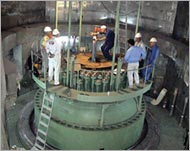
Iran said it planned to resume
uranium enrichment soon |
But the resumption was clouded by a reported announcement from Tehran that Iran plans to resume uranium enrichment soon.
Iran
has consistently claimed it is only giving up enrichment voluntarily as
a confidence-building measure and reserves the right to enrich uranium
when it wishes.
The IAEA team arrived in Tehran on Wednesday and is to stay in the country for a week, student news agency ISNA reported.
Tehran gave permission for inspectors to take environmental samples from the massive Parchin site about 30km southeast of Tehran to disprove US allegations of secret weapons-related activities.
Tehran 'watchful'
Washington
has voiced concern that the Iranians may be working on testing
high-explosive charges with an inert core of depleted uranium at
Parchin as a sort of dry test for how a bomb with fissile material
would work.
Tehran has denied carrying out any nuclear-related work at the site and insists its nuclear drive is aimed at generating electricity.
|
"We have allowed inspections into our military installations
but we will not allow
any espionage or the theft of information
from our military sites"
Hossein Mousavian,
spokesman for Iran's nuclear negotiations team |